


How to Coordinate Wood Stair Handrails with Treads and Flooring
A staircase frequently sits within an open entrance, hallway, or living space, making it an important part of the interior finish plan. Well-selected wood stair handrails can connect flooring, treads, balusters, newel posts, and nearby millwork into a consistent composition. Flooring dealers, contractors, homebuilders, architects, and designers should therefore specify the railing alongside the other visible staircase components rather than selecting it as an isolated product.
Start with the Dominant Wood Surface
Most staircase finish plans begin with the largest visible wood surface. In some projects, this is the hardwood flooring. In others, the stair treads or an existing handrail establish the material direction.
If new flooring has already been selected, record its species, grade, stain color, undertone, grain pattern, and sheen. These details provide a reference for the staircase. A product described simply as “medium brown oak” does not give the supplier or finisher enough information to produce a convincing relationship between materials.
Existing features should also be documented. Door casings, baseboards, cabinetry, ceiling beams, and fireplace mantels may influence whether the handrail should blend with the stairs or act as a contrasting element.
Decide Between Matching and Contrasting Finishes
Matching the handrail to the stair treads can create a unified appearance. This approach is often used in traditional interiors and projects where one hardwood species is carried throughout the home.
However, an exact color match is not always necessary or possible. Natural wood changes from board to board, and different grain patterns absorb stain differently. Flooring, handrails, and treads may also be manufactured and finished at separate times.
A coordinated finish uses a related color family and undertone without requiring every component to look identical. This approach accepts natural variation while keeping the staircase visually connected.
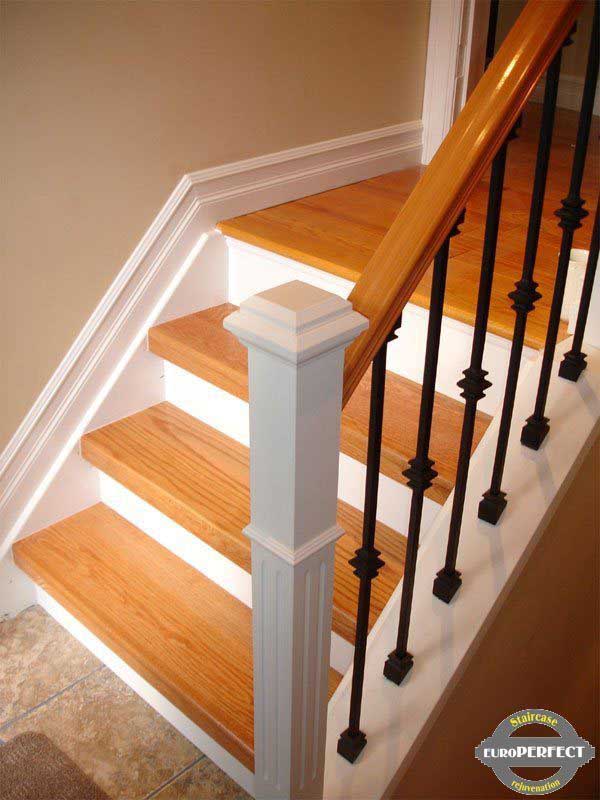
Contrast is another option. A dark handrail can define a staircase with light treads and painted risers. It may also relate to black iron balusters, dark window frames, or nearby furniture. Contrast works best when the darker or lighter finish is repeated elsewhere in the room.
Compare the Character of Different Wood Species
Wood species affect both the appearance of a handrail and the way it responds to stain. Red oak has a pronounced grain and generally displays warmer undertones. White oak often has a more neutral brown appearance, with rays and flecks that become visible in certain cuts. Maple has a finer, less prominent grain and may produce a smoother visual effect.
Using the same species for the treads and handrail can make color coordination easier, but mixed species can work when chosen deliberately. A finer-grained rail paired with strongly grained treads may show noticeable differences even under a similar stain.
Designers should compare unfinished and stained samples before approving a mixed-species package. The goal is to understand how the materials relate, not simply whether they share a stain name.
Select a Profile That Fits the Interior
The handrail profile influences how formal, traditional, or contemporary the staircase appears. Moulded profiles with rounded edges can suit classic interiors, detailed newel posts, and turned wood balusters.
Simpler rectangular or gently shaped profiles work well in contemporary spaces. They can complement square newel posts, clean trim, iron balusters, and flooring with minimal color variation.
Profile size matters as well. A substantial rail may suit a wide staircase or large entrance but appear heavy in a narrow stairwell. A smaller profile may feel more balanced in a compact home, although the final selection must still satisfy applicable graspability requirements.
All fittings should match the chosen profile. Turns, easings, goosenecks, and returned ends made for another rail shape may not align correctly.
Coordinate the Balusters and Newel Posts
A handrail is only one part of the railing assembly. Balusters, newel posts, fittings, rosettes, shoes, and mounting details must work with it structurally and visually.
Square-top wood balusters commonly require a plowed rail with a routed channel underneath. Fillet pieces fill the spaces between the balusters. Pin-top wood balusters and many iron-baluster installations may use a non-plowed rail, depending on the attachment method.
Newel posts should have enough visual weight to support the selected profile. Highly detailed posts combined with a plain modern rail can appear disconnected unless the contrast is part of a clear design concept.
These compatibility decisions should be confirmed before the rail is ordered. Changing baluster styles later may require a different plow size, fittings, or installation method.
Use Physical Samples and a Written Finish Schedule
Digital images cannot show wood color with complete accuracy. Screen settings, photography, daylight, and artificial lighting can all alter its appearance.
Physical samples should be reviewed beside the flooring and stair treads in the project space. Compare them in daylight and under the planned evening lighting. Pay attention to undertone and sheen as well as overall color.
Once approved, the finish schedule should list the species, stain, sheen, profile, plow configuration, baluster type, fittings, newel posts, and any components that require color coordination. Labeling the approved sample and keeping it available during installation can help resolve questions on site.
A coordinated staircase depends on early material decisions and accurate component specifications. By considering the handrail alongside the flooring, treads, balusters, newels, and surrounding millwork, project teams can create a staircase that feels connected to the wider interior. Visit Wood Stair Co to compare wood handrail profiles, species, lengths, finish options, and compatible stair parts for your next residential project.