


In the pantheon of jewelry history, few eras possess the immediate recognizability and enduring cool of the 1920s and 30s. Born out of a desire to break away from the flowery, flowing lines of the Art Nouveau period, the movement embraced a bold, streamlined aesthetic that mirrored the rise of the skyscraper and the machine age. Today, modern couples and serious collectors alike are returning to art deco rings as the ultimate expression of individuality and sophisticated taste. These pieces represent a moment in time when jewelry stopped looking back at nature and started looking forward toward the future, utilizing mathematical precision to create wearable architecture.
The Rise of the Machine Age Aesthetic
The Art Deco movement—short for Arts Décoratifs—flourished following the 1925 Exposition Internationale in Paris. It was a visual celebration of the “New World.” As airplanes, automobiles, and jazz music transformed the cultural landscape, jewelry designers began to experiment with linear symmetry and stepped designs.
Unlike the jewelry of the Victorian era, which relied heavily on sentimentality and floral motifs, Deco pieces favored the “white on white” look. This was achieved through the masterly use of platinum and white gold, which provided a cool, industrial backdrop for the brilliance of high-quality diamonds. The result was a look that was both stark and incredibly glamorous, capturing the rebellious spirit of the “flapper” generation.
Key Characteristics of Art Deco Craftsmanship
What truly sets these vintage pieces apart from modern reproductions is the level of hand-finishing involved. If you are examining an authentic piece from this period, you will notice several distinct hallmarks:
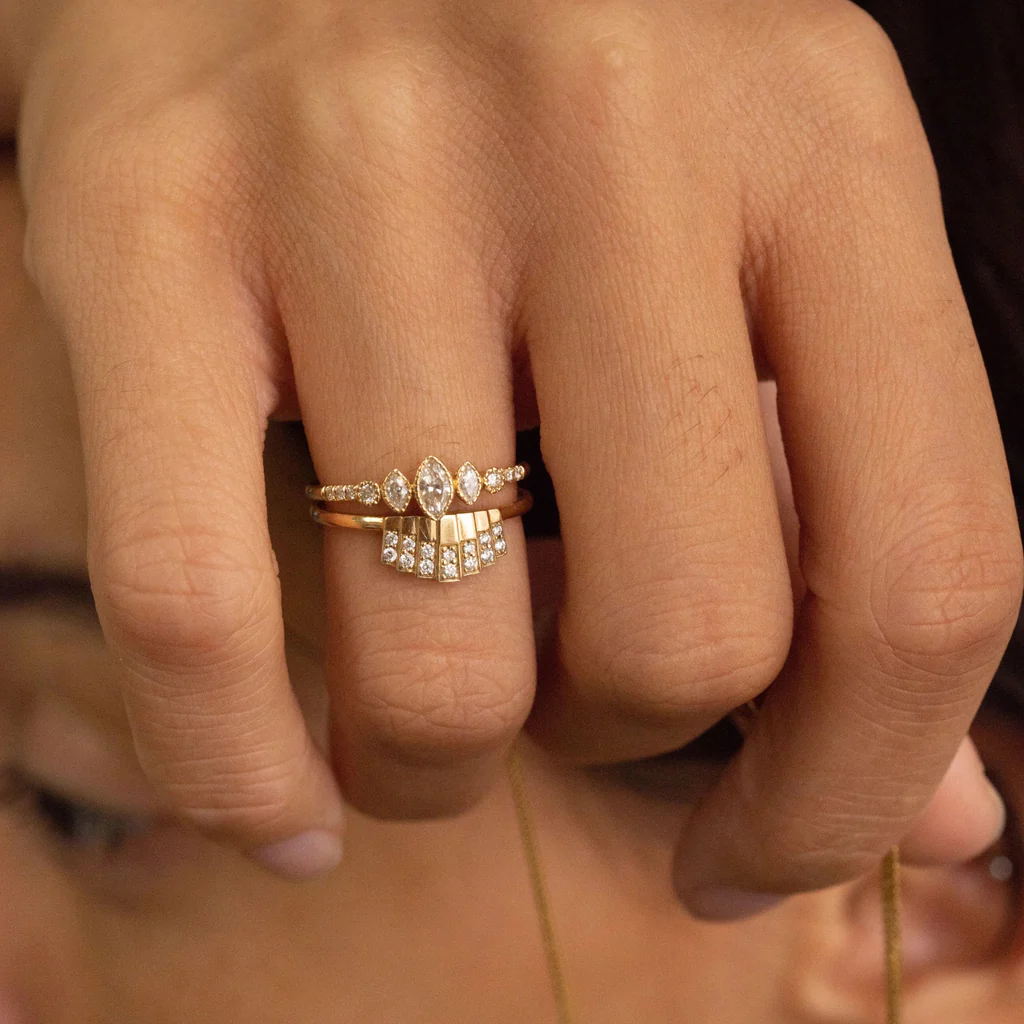
- Geometric Silhouettes: Look for shields, hexagons, octagons, and rectangles. Even the way diamonds were cut changed, with the rise of the emerald cut and the Asscher cut providing the clean lines necessary for these structural designs.
- Filigree and Milgrain: While the shapes were bold, the details were often incredibly fine. Filigree involves thin threads of precious metal soldered into intricate patterns, while milgrain refers to the tiny “beaded” edges that give a ring a soft, textured finish.
- Calibre-Cut Gemstones: One of the most striking features of the era is the use of custom-cut accent stones—often rubies, sapphires, or emeralds—that were cut specifically to fit into the geometric curves of the setting without any gaps.
Why Modern Brides Prefer the Vintage Original
In an age where “cookie-cutter” jewelry dominates the high street, an original Art Deco piece offers a sense of exclusivity. Because these rings were often handmade or produced in small workshops, it is highly unlikely that you will ever walk into a room and see someone else wearing the exact same design.
Beyond the aesthetic, there is a significant “ethical luxury” component. By choosing an estate ring, buyers are participating in a circular economy. There is no new mining or industrial toll on the environment; instead, the buyer becomes the next steward of a piece of history. For the modern engagement ring shopper, this combination of high style and low environmental impact is an incredibly compelling narrative.
The Investment Value of Deco Jewelry
From a collector’s perspective, the market for high-quality Art Deco jewelry has remained remarkably stable. As the supply of authentic, well-preserved pieces from the 1920s diminishes, their value continues to climb. Collectors often look for pieces that exhibit “signed” work or those that feature unique combinations of stones, such as the classic “target” ring design which features a center diamond surrounded by a halo of colored gemstones.
However, the value isn’t just in the materials. It is in the rarity of the craftsmanship. Many of the techniques used to create the heavy, die-struck platinum settings of the era are rarely utilized today due to the high cost of labor and the specialized skill required. Owning one of these rings is akin to owning a piece of the Chrysler Building or a vintage luxury liner—it is a relic of a time when design was unapologetically grand.
Preserving Your Heirloom
For those who choose a piece from this era, a small amount of care goes a long way. Platinum is exceptionally durable, which is why so many Deco rings have survived in such excellent condition. However, because these designs often feature many small accent stones (pavé or calibre-cut), it is wise to have a specialist check the integrity of the settings every few years. This ensures that the delicate geometry of the piece remains intact for another century of wear.
Ultimately, choosing a ring from this period is about more than just picking a piece of jewelry; it is about choosing a legacy. It is a tribute to an era of optimism, innovation, and timeless elegance. Finding a reputable source is essential for ensuring authenticity and quality in such a specialized market. For those ready to begin their journey into the world of fine antiques, Gesner Estate Jewelry provides the professional guidance and curated selection necessary to find a piece that truly resonates with your personal story.